
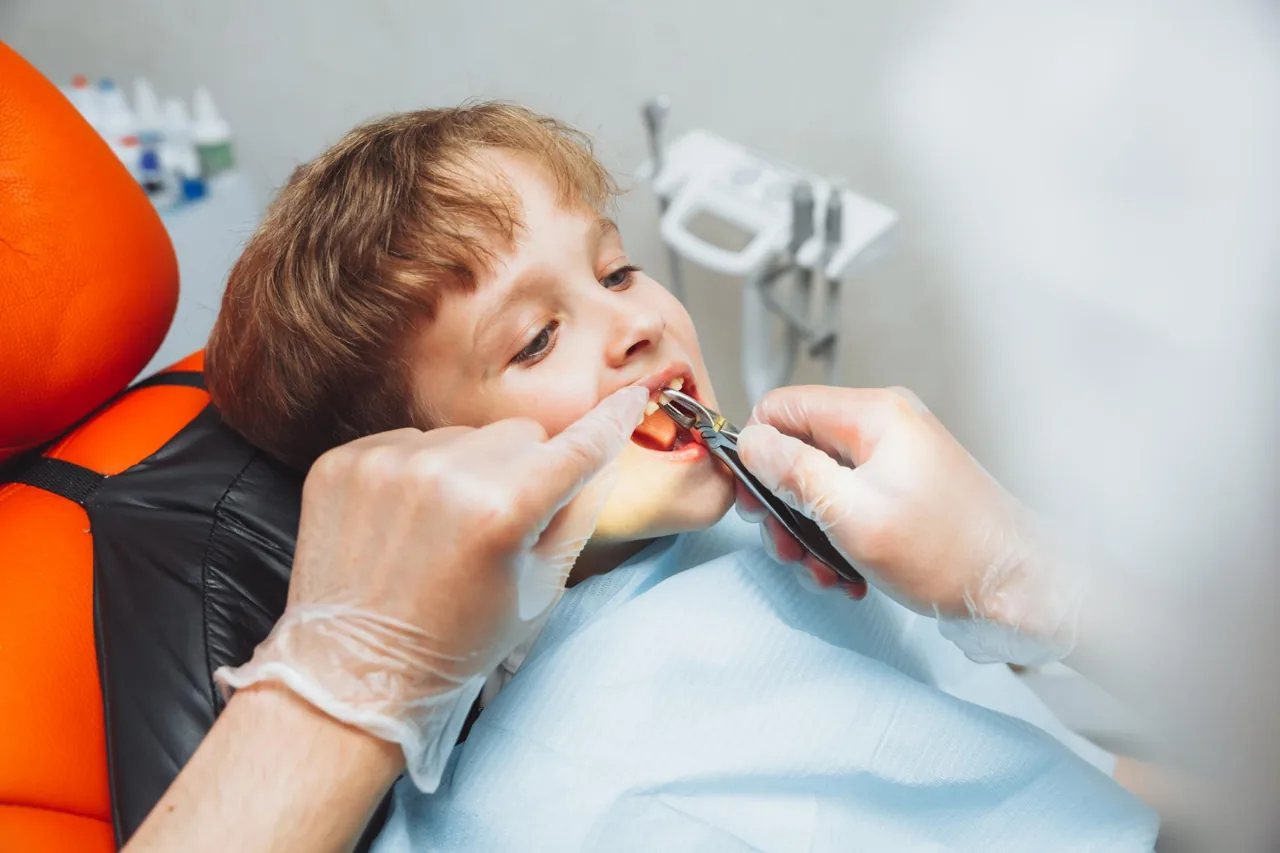
A Calmer First Night After Your Child’s Tooth Extraction
When your child has a tooth pulled, it’s completely normal to feel a little nervous about what comes next. You want them comfortable, safe, and able to sleep that first night without any big surprises. The encouraging news is that most kids bounce back faster than parents expect, especially with a simple plan and clear expectations.
Your child may have had a baby tooth removed that was stuck or not falling out on its own, or a permanent tooth taken out to make room for orthodontic treatment (care that helps straighten teeth and guide their bite). Some extractions are very simple, where the tooth is already loose and comes out quickly. Others are a bit more involved and may have needed numbing medicine, special instruments, and extra time.
Our goal here is to give you a calm, step-by-step guide for what happens after you get home. We’ll walk through recovery in the first hours and days, how to manage pain, what your child can safely eat, how healing usually looks, and when it’s time to call a pediatric dentist for help. As kids head into spring sports, camps, and family trips, a smooth recovery now helps them get back to their favorite activities feeling great.
The First 24 Hours: What to Expect and What to Watch
The first day is all about protecting the area and letting a healthy blood clot form in the socket, the little space where the tooth used to be. That clot is like a natural bandage and is very important for healing.
In the first few hours at home, you can expect:
- Gauze in place over the spot where the tooth was removed
- Light oozing or pink saliva as the blood clot settles
- Mild soreness and maybe a little swelling in the cheek or gums
Here’s what to do right when you get home:
- Help your child keep gentle pressure on the gauze by biting down
- Have them rest with their head slightly raised on a pillow
- Limit talking, spitting, and rinsing so the clot is not disturbed
Some things are normal, even if they look a little concerning at first:
- A tiny bit of bright red blood that slowly turns to pink saliva
- Mild swelling that stays about the same or starts to go down
- A sleepy or quiet child, especially if they had sedation (medicine that helps them relax or sleep during the visit)
Watch for warning signs:
- Heavy bleeding that soaks through gauze and does not slow after 20 to 30 minutes of firm pressure
- Swelling that suddenly increases, especially around the eye or neck
- Fever, chills, or your child acting very unwell
You can keep the mood calm by using simple, reassuring phrases, like:
- “Your mouth is healing. This is your body doing a good job.”
- “Let’s keep your tongue and fingers away from that spot so it can get better faster.”
- “Tonight is for resting and movies, and tomorrow will already feel easier.”
The more relaxed you are, the more relaxed your child is likely to be. Your steady, matter-of-fact tone is one of the best “medicines” they have that first night.
Managing Pain and Keeping Your Child Comfortable
Most kids do not have severe pain after a tooth extraction, but some soreness is very common. Your child’s dentist may suggest familiar over-the-counter medicines in a liquid or chewable form, based on your child’s age and weight. Follow the dose and timing instructions exactly, and don’t mix medications without guidance from your child’s dentist or pediatrician.
For school-age kids and teens, it helps to set expectations:
- They may feel sore or “achy” for a couple of days
- Many can go back to school the next day if they feel up to it
- Sports, running, or rough play may need to pause for a day or two
Comfort boosters that kids usually love:
- A cold pack or cool washcloth on the cheek in short intervals
- A quiet movie or game night where they do not have to talk much
- Their favorite blanket or stuffed animal at bedtime
- Extra hugs and a calm bedtime routine so they feel safe
Pediatric dental specialists plan extractions with comfort in mind. That might include choosing the right numbing medicine and, when needed, special sedation options that help kids stay relaxed and remember less of the stressful parts. The goal is always the same: keep your child comfortable during the visit and make recovery as easy as possible at home.
What Your Child Can Eat After a Tooth Extraction
Food choices play a big role in how comfortable your child feels after an extraction.
For day 1, think “soft and cool”:
- Yogurt or pudding
- Applesauce
- Smoothies sipped with a spoon, not a straw
- Mashed potatoes or macaroni cooked very soft
- Scrambled eggs that are warm, not hot
Cool foods can soothe the area, and soft textures mean less chewing. Avoid anything very hot, since heat can increase swelling and might disturb the clot.
On days 2 and 3, many kids feel ready for a bit more texture. You can slowly add:
- Soft pasta
- Soft rice dishes
- Tender, shredded chicken on the opposite side of the mouth
- Oatmeal or cream of wheat that is warm, not hot
Still avoid:
- Straws and sucking motions, which can pull the clot out
- Carbonated drinks and sports drinks, which can irritate the area
- Chips, crackers, and popcorn, which have sharp pieces
- Sticky candy or chewy snacks that can get stuck near the site
For a fun, spring friendly treat, soft fruit cups, yogurt pops, and smooth, blended smoothies help kids feel like they are not “missing out,” while still being gentle on sore gums.
Healing Timeline From Day 2 Through the Next Two Weeks
Knowing what is typical at each stage of healing helps you spot problems early and also prevents worry when things are going well.
Most kids follow a pattern like this:
- Days 2 to 3: Mild soreness when chewing, some tenderness if the cheek is bumped, and maybe light swelling that starts to go down.
- Days 4 to 7: Discomfort keeps fading, the area may look less red, and many kids feel completely back to normal in their daily routine.
- By week two: The gums usually look mostly healed on the surface, even though deeper healing is still happening.
Oral hygiene is very important, but it needs to be gentle:
- Your child can usually brush their other teeth that first night, staying away from the extraction site.
- After the first day, older kids may gently rinse with warm salt water, if their dentist has said it is okay. This is just a simple mix of salt and warm water that can help keep the area clean and comfortable.
- Flossing can continue in the rest of the mouth, with extra care near the area.
Healing can be a little faster and easier after a baby tooth extraction than after a permanent tooth is removed, simply because baby roots are smaller. If the extraction was part of orthodontic planning (timing teeth removal to work with braces or other straightening treatments), you can keep in touch with your child’s orthodontic schedule so that braces or other appliances line up well with healing.
When a child’s tooth extraction is paired with good home care and clear guidance, most families see a smooth recovery without long-lasting discomfort.
When to Call the Dentist and How We Can Help
Even when you follow every instruction, it helps to know exactly when to get extra help.
Red flags include:
- Strong pain that gets worse after the first two or three days, instead of better
- A bad smell or taste from the area
- Pus, thick discharge, or new swelling around the jaw or face
- Bleeding that keeps coming back, even with firm pressure on fresh gauze
- Fever or your child acting very sick
Sometimes things are probably normal, but still worth asking about. For example,
- Mild pain that seems “off” compared with what you were told to expect
- A small piece of tooth or bone you are not sure about
- A worried feeling that something just is not right, even if you cannot say why
Pediatric teams are used to “nervous parent” questions and are happy to answer them. A quick phone call, a description, or a photo can give everyone peace of mind or show that your child should be checked in person. You should never feel like you are “bothering” the office, supporting you at home is part of taking good care of your child.
Helping Your Child Smile Confidently After an Extraction
With kind aftercare and a simple plan, most kids heal quickly and go back to smiling, laughing, and eating their favorite foods before you know it. A tooth extraction is often an important step toward a healthier bite, more room for permanent teeth, and a smile they can feel proud of, now and as they grow.
At EDC Smiles Children’s Dentistry & Orthodontics, we see recovery time as a chance to build strong habits around brushing, flossing, and choosing tooth-friendly snacks. Our pediatric specialists and orthodontic team work together to keep visits kid-friendly and relaxed, so every appointment feels a little more like home and a little less like “going to the dentist.”
For families in Frisco who are planning or recovering from a child’s tooth extraction, our goal is to make every visit and every follow-up as comfortable, calm, and relationship-focused as possible, so you and your child feel supported at every step.
Help Your Child Feel Comfortable and Confident About Their Smile
If your child is nervous about an upcoming extraction, we are here to make the experience as gentle and stress-free as possible. Learn how our approach to kids’ tooth extraction in Frisco focuses on comfort, clear communication, and long-term oral health. At EDC Smiles Children’s Dentistry & Orthodontics, we tailor every visit to your child’s unique needs and personality. Have questions or want to schedule an appointment today? Simply contact us .